Gardening Services in Kilburn

Gardening services in Kilburn should keep outdoor spaces tidy, workable and suited to the way they are actually used. Our work covers practical garden care rather than decorative claims, with support for regular upkeep, one-off jobs and larger improvement tasks where a clear plan matters. If you need a straightforward way to maintain a front garden, refresh a back garden or bring overgrown areas back under control, we can shape the service around the condition of the space and the work that needs doing.
The main aim is to leave the garden easier to manage and better prepared for everyday use. That can include mowing, trimming, clearing, cutting back growth and dealing with problem areas that have been left for too long. We also help customers who want a more structured approach, where different tasks are grouped into a visit so the work feels coherent rather than piecemeal. Practical gardening is often about sequence as much as effort, especially when access, waste and plant health all need considering.
If you are comparing options, start by thinking about the visible jobs first and the longer-term maintenance second. A small space may only need a single tidy-up, while a larger plot may need a plan that combines several tasks in the right order. Tell us what the garden looks like now and what you would like it to become, and we can help you request a quotation that reflects the real work involved.
Regular Garden Maintenance
Routine garden maintenance is the foundation of a neat, usable outdoor area. It usually includes mowing where there is lawn, edging to define boundaries, trimming softer growth, and light clearance so paths and borders remain accessible. The point is not only to improve appearance but also to stop manageable jobs becoming more demanding later on. For many properties, a consistent maintenance schedule is simpler than dealing with a long list of neglected tasks all at once.
We can organise maintenance as a recurring service or as an occasional visit when the garden needs attention after a busy season. The tasks chosen depend on the planting, the size of the space and how much growth has built up since the last visit. If you already know which parts of the garden are most important to keep under control, that helps shape the work, but it is equally fine to ask for an assessment of the main areas and the most sensible order of operations.
Mowing, edging and surface tidying
Lawn care often looks simple from a distance, yet the useful work is in the details. Cutting to a suitable height, clearing clippings, shaping edges and leaving access points neat can make a garden feel far more orderly without changing its character. Where there are paths, patio edges or small boundary strips, tidy finishing helps the whole area look deliberate. If you need a broader service, our lawn mowing page gives a clearer view of the mowing element as a dedicated task.
Cutting Back Overgrowth and Clearing Space
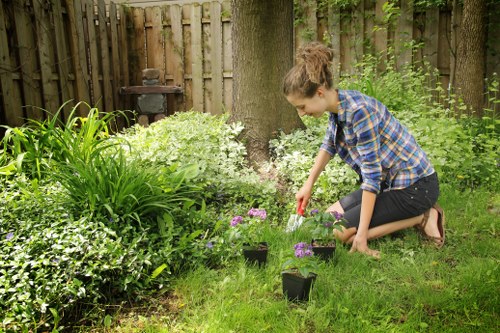
Some gardens need more than routine upkeep. Growth can become dense, edges may blur into beds or boundaries, and access can become awkward. In those cases, the work may involve selective cutting back, removal of surplus growth and a more deliberate tidy-up to restore shape. This is not just about appearance; it can also help reveal what is worth keeping and what needs a different approach. When the garden has been neglected for a while, the sequence of tasks matters as much as the tools used.
Where there is a mixture of plants, shrubs and self-seeded material, we focus on what is suitable to remove and what should be preserved. That can make the difference between a rough clearance and a useful reset. If you need a one-off intervention before the garden can return to maintenance, it is often best to request this separately from routine visits, so the scope is clear from the outset. You can read more about garden clearance if the area needs a fuller clean-up.
Useful preparation does not need to be complicated. A brief description of the area, any access issues and the main jobs you want handled is usually enough to begin. If there are items left in the garden, awkward corners or plants you would like protected, mention those too. Photos can help when the space is difficult to describe, but they are not a substitute for a clear description of the work you want done.
Hedge Cutting and Plant Shaping
Hedge trimming is one of the clearest ways to improve structure in a garden. A hedge can define privacy, outline a boundary or simply provide a stronger visual edge, but only when it is kept in shape. We trim hedges with attention to their line, density and location, taking care that the result looks balanced rather than shaved back indiscriminately. The method used depends on the plant type and the level of growth, so the work is rarely identical from one property to another.
Shape also matters for other planted areas. Shrubs and smaller woody growth may benefit from careful reduction rather than heavy cutting, especially where the aim is to keep the garden tidy while preserving healthy growth. If you need this sort of work as part of wider garden care, it can often be combined with border tidying or mowing so the overall finish is more consistent. For a more specific view of this service, see our hedge trimming page.
We are mindful that some trimming jobs are about control rather than major reshaping. A well-judged cut can improve light, maintain boundaries and stop growth from dominating paths or windows. On the other hand, overcutting can make a garden look sparse and take longer to recover. That is why the intended result should be described clearly at quotation stage, especially when the hedge or shrub line is part of the garden’s main layout.
Landscape Gardening and Larger Garden Changes

Landscape gardening brings a broader approach to outdoor space, moving beyond maintenance into layout, planting structure and more substantial garden changes. This may involve redesigning beds, shaping lawn areas, improving circulation around the garden or creating a more coherent layout for everyday use. The useful starting point is the present condition of the space and the outcome you want, because the work can range from fairly light alterations to more involved preparation and reworking.
At this level, decisions are often about proportion and practicality. A garden may need better definition between lawn and borders, a tidier transition between hard and soft surfaces, or a more workable planting structure. We can help with projects where the aim is to improve how the space functions as well as how it looks. If your plans are more substantial than routine care, our landscape gardening page covers that type of work in more detail.
There is also room to combine structural changes with practical maintenance so the garden remains manageable after the main work is finished. A new layout only helps if it can be maintained sensibly, so we look at the finish as part of a wider routine rather than a separate afterthought. That may mean simplifying difficult corners, improving access to borders or reducing areas that are hard to keep in good order.
Design-Led Landscaping Work
Some gardens need a fuller landscaping service that combines planning, preparation and physical changes to the outdoor area. This can include reshaping existing features, introducing new surfaces or improving the balance of the space so it feels more usable. The main task is to translate a broad idea into work that can actually be carried out in stages, with a clear sense of what comes first and what the finished area should achieve.
Landscaping can be especially helpful where a garden has awkward levels, poorly defined edges or a layout that makes simple maintenance harder than it should be. By addressing the structure of the space, the garden may become easier to enjoy and simpler to look after. If you want to explore this as a dedicated service, our landscaping page provides a focused route for enquiries about bigger projects and changes to the garden’s structure.
When a project has several elements, it helps to separate the essential work from the optional extras. That makes it easier to compare approaches and avoid a vague quotation. Some customers want a direct improvement to a single area, while others prefer a broader refresh that combines multiple changes into one organised job. Either way, clarity about the scope is the best starting point.
Lawns, Borders and Ongoing Presentation

A well-kept garden usually depends on the relationship between the lawn, the borders and the edges around them. If one part is neglected, the whole space can look less settled even if the rest is in decent condition. We take a practical view of presentation, making sure the garden is not only cut back or cleared but also arranged in a way that leaves a clean overall impression. That includes the visible details that customers tend to notice first, such as uneven edges or cluttered border lines.
This is also the point where small improvements can have a useful effect. Tidying the margins around planted areas, cutting back encroaching growth and improving the definition of pathways can make a space feel more open without changing its character. If you are looking for a specific lawn task within the wider garden, our lawn mowing page remains the clearest destination, while broader garden upkeep may sit better with regular maintenance.
- Define which areas matter most, such as the front garden, lawn, borders or access paths.
- Separate routine upkeep from one-off work so the quotation matches the job.
- Let us know if the space contains plants you want retained, reduced or removed.
- Include any access considerations, such as side passage widths, gates or storage obstacles.
About Kilburn
Kilburn is a north-west London district whose identity has been shaped by its position on the edge of several borough boundaries, most notably Brent, Camden and parts of Westminster. The area grew significantly in the nineteenth century, particularly after transport improvements encouraged denser residential development, and much of its built character still reflects that period of expansion. Terraced housing, mansion blocks and mixed commercial streets create a varied urban fabric, with lively main roads and quieter side streets sitting close together. Kilburn High Road is one of the most recognisable thoroughfares in the area, running through a long corridor of shops, services and transport links. The district is also associated with a strong cultural mix, which has influenced local shops, restaurants and everyday street life over many decades. Nearby green spaces such as Queen’s Park and Kilburn Grange Park provide important relief from the built environment, while the wider surrounding neighbourhoods connect Kilburn to the broader rhythm of inner north-west London. The area’s architecture is not uniform: some streets preserve late Victorian and Edwardian terraces, while others show later redevelopment and more contemporary additions. That mix gives Kilburn a layered look, where older residential forms sit alongside heavier traffic routes and busy local centres. The result is a place with a clear urban identity, shaped by housing history, rail and road connections, and a dense pattern of daily activity.
Tree Work and Heavier Outdoor Clearance
Not every garden issue is solved by trimming or mowing. Larger woody growth, awkward branches and overextended trees may call for more decisive work, especially where they are affecting light, access or the usable shape of the garden. We can help with heavier outdoor clearance tasks that require a careful, controlled approach rather than simple cutting. The aim is to reduce clutter and restore sensible proportions without creating unnecessary disturbance.
Tree-related work can vary a great deal, from reducing overhanging growth to removing a problem specimen where that is the appropriate course of action. Because these jobs can affect the rest of the garden and sometimes nearby boundaries, they are best quoted with as much detail as possible. If your garden needs that kind of intervention, the dedicated tree lopping and removal page is the right place to start. Where multiple jobs are involved, we can discuss how they fit together so the work is handled in the correct order.
Clearance work often has a strong practical purpose. It can open up light, restore access or make later maintenance more realistic. That said, it is still important not to treat all overgrowth as the same. Some growth is structural, some is seasonal and some is simply in the way. A thoughtful plan helps distinguish between those situations and keeps the result more controlled.
Choosing the Right Scope and Requesting a Quotation

Quotations are easier to prepare when the service scope is specific. Rather than asking for everything at once, it helps to name the main jobs first: mowing, hedge cutting, garden clearance, wider maintenance or a larger landscaping task. That gives a cleaner basis for the price and avoids confusion about what is and is not included. Where access is awkward, or where there are several separate areas, those details should be mentioned at the same time so the work can be planned sensibly.
Price can depend on the size of the garden, the amount of growth, the level of cutting or clearance required, and whether the job is straightforward maintenance or something more involved. A small tidy-up and a neglected garden are not the same kind of task, even if they are both described as gardening. If you want to compare options first, our services overview page is a useful starting point before you request a quotation for the exact work you need.
If you are ready to move ahead, send a clear description of the garden and the task list, and ask for a quotation based on the current condition of the space. You can also look at pricing and quotes when you want a better sense of how estimates are put together. For a direct enquiry, contact us with the details of the work and we will take it from there.